"HIDDEN CHEMICALS — WHAT HAPPENS WHEN FABRICS ARE A CHEMICAL COCKTAIL?"
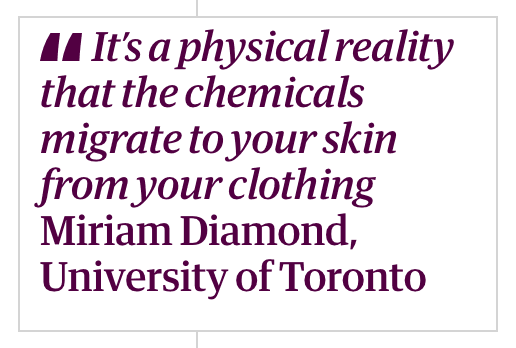
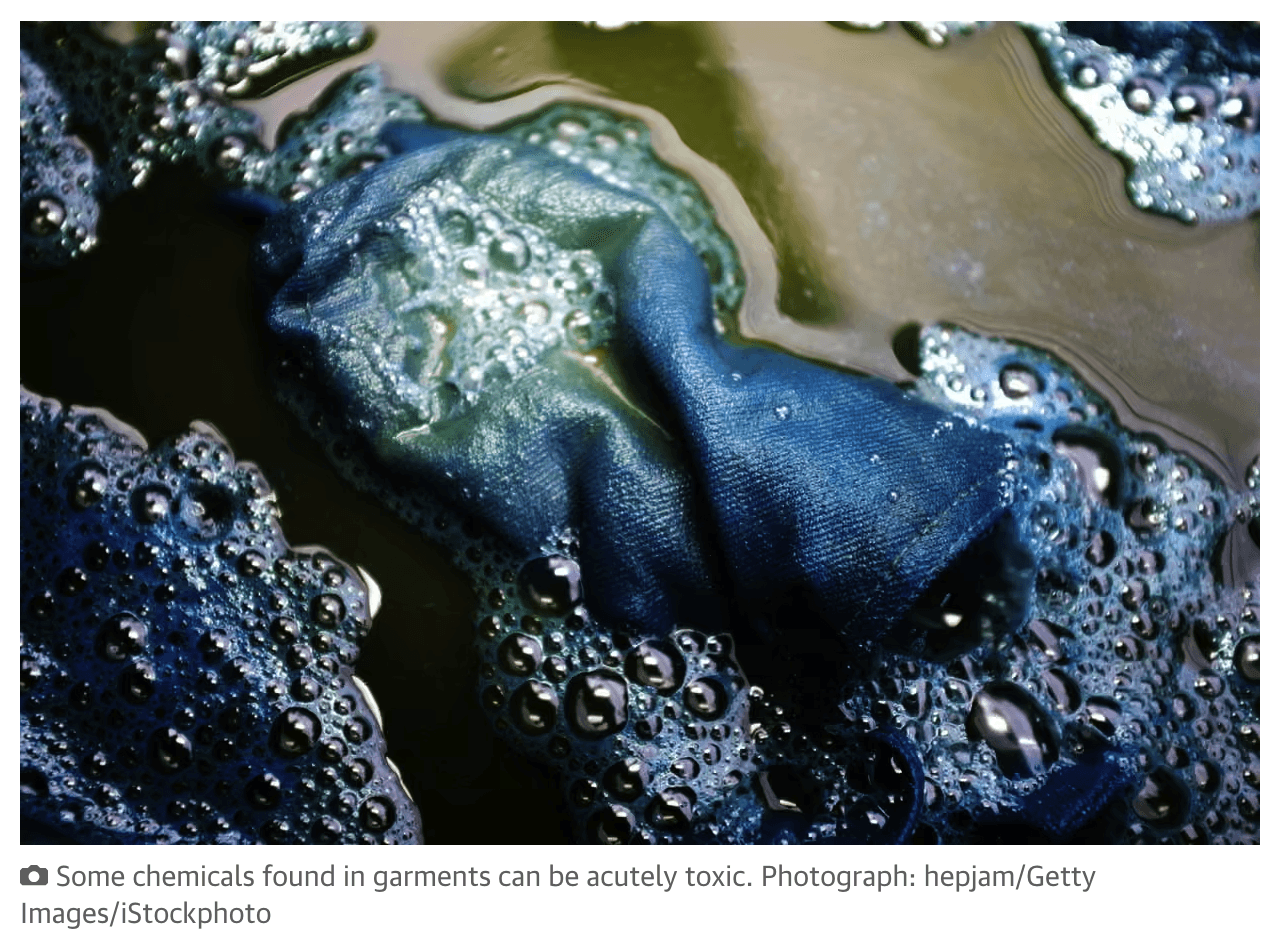
Most people assume cotton = natural = safe. But cotton stops being cotton the moment it enters the modern textile process. By the time a garment reaches you, it has likely been bleached, dyed, softened, water-proofed, wrinkle-treated, and coated in chemical finishes — many of which are designed to bond permanently to fibres, meaning they don't wash out. They stay in the fabric, against your skin, for the life of the product.
Recent studies have found the following in everyday clothing and textiles:
• Banned PFAS (per- and polyfluoroalkyl substances) — linked to cancer, immune suppression, and hormone disruption — found in waterproof jackets, stain-resistant fabrics, and even children's clothing.
• Endocrine-disrupting compounds — chemicals that interfere with hormonal systems — detected in synthetic activewear and fast fashion basics.
• Halogenated flame-retardants — persistent toxins linked to neurological damage — used in sleepwear, furniture textiles, and uniforms.
• Allergenic chemicals — such as formaldehyde-based resins and certain disperse dyes — responsible for rising rates of contact dermatitis and skin sensitisation.
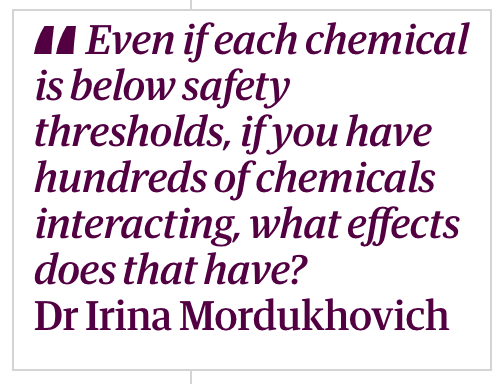
And the industry's favourite line is: "But these are within safe limits." The problem? Those limits are set chemical by chemical, in isolation, often based on short-term exposure studies. No regulatory body currently tests for the cumulative effect of wearing multiple treated garments — day after day, layer after layer, year after year.
"WE TEST CHEMICALS ONE BY ONE, WHILE PEOPLE ARE EXPOSED TO THEM ALL AT ONCE."
The reality is simple: Chemical exposure from textiles is low per day, but chronic, layered, and lifelong. Your skin is not a barrier — it's a sponge. And the clothing industry has spent decades treating it like a dumping ground for chemical convenience.

MICROPLASTICS
Every time you wear, wash, or move in synthetic clothing, invisible plastic fibres shed from the fabric. These microplastics — tiny fragments of polyester, nylon, acrylic, and elastane — don't just pollute the ocean. They enter your body. Through your skin. Through the air you breathe. Through the water you drink. They've been found in human blood, lungs, liver, and placental tissue.
The textile industry accounts for 35% of oceanic primary microplastics — more than any other single source. A single polyester garment can shed up to 700,000 microfibres in one wash cycle. But shedding doesn't only happen in water. Dry abrasion — simply wearing and moving in synthetic clothes — releases airborne microplastics that are inhaled directly into the lungs.
Emerging research is drawing increasingly alarming links between microplastic exposure and male fertility:
• Microplastics have been detected in human testicular tissue, with polypropylene and polyethylene being the most common types found.
• Studies show a correlation between microplastic concentration in testes and reduced sperm count — with sperm counts in Western men dropping by over 50% in the last four decades.
• Microplastics carry endocrine-disrupting chemicals (EDCs) such as phthalates and bisphenols, which interfere with testosterone production and sperm development.
IMPACT ON WOMEN'S FERTILITY
The effects are not limited to men. Microplastics have now been found in ovarian tissue, placental tissue, and even breast milk — suggesting that exposure begins before birth and continues through the earliest stages of life.
• Microplastics have been identified in human placental tissue on both the maternal and foetal sides, raising concerns about prenatal exposure and developmental effects.
• Studies have detected microplastics in ovarian follicular fluid, with potential implications for egg quality, hormonal regulation, and IVF outcomes.
• Microplastics have been found in breast milk, indicating that infants are exposed to synthetic particles from the earliest stages of feeding.
The science is still emerging — but the direction is clear. The synthetic fabrics we wear every day are not inert. They shed, they migrate, and they accumulate. And the people most affected are the ones least able to protect themselves.